Heat styling is not the enemy. Unmanaged heat is. A blow dryer, flat iron, or curling iron used at the right temperature, on dry hair, with protectant, gives Cramerton clients styles that hold through a humid day. The same tools used hotter than needed, on damp hair, without protection, quietly cook the strand a little more each week until the damage shows up as frizz, breakage, and color that will not stay bright.
The decision that matters is not whether to use heat. It is matching the temperature and technique to your hair's thickness, condition, and chemical history. Fine or lightened hair and coarse virgin hair live at opposite ends of that decision, and treating them the same is how damage happens.
First, the two habits that do the most work
Heat protectant is not optional garnish. These products form a barrier that slows heat transfer into the strand and distributes it more evenly, and they measurably reduce damage when used consistently. Apply it to every section that will see the tool, not just the top layer, and let it dry in before the iron touches the hair.
The second habit is the dryness rule. Hair should be fully dry before a flat iron or curling iron touches it. The quick check stylists call the sizzle test is simple: if you hear sizzling or see steam when the tool closes, the hair is still wet inside, and that steam is water boiling within the strand, which is one of the most destructive things heat styling can do. A blow dryer on rough-dried hair is fine; a hot iron on damp hair is not.
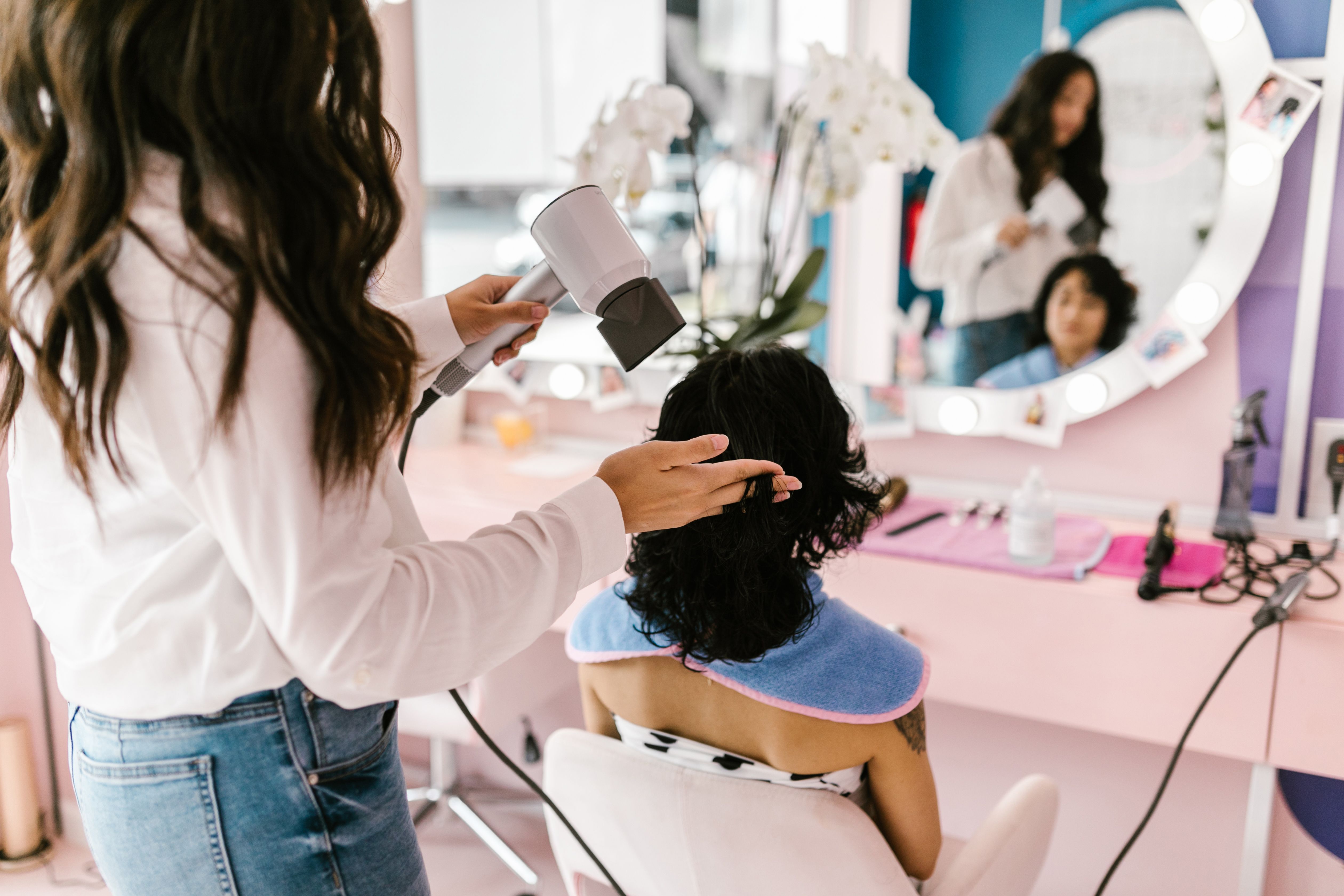
Choosing settings by hair type
| Your hair | Temperature approach | Technique notes |
|---|---|---|
| Fine, thin, or fragile | Lowest effective heat; test on a small section and raise only if the style will not take | One slow pass beats three fast ones; never re-iron the same section repeatedly out of habit |
| Lightened, colored, or previously damaged | Low to moderate heat, treated like fine hair regardless of thickness | Chemical processing lowers heat tolerance; protectant is essential every time |
| Medium, healthy, untreated | Moderate heat for most styling | Work in clean sections so each pass counts, and keep the tool moving on blowouts |
| Coarse, thick, or very curly | Moderate to higher heat can be appropriate on healthy hair | Stretch and dry thoroughly with the dryer first; the iron is for finishing, not for drying |
| Extensions or delicate ends of any type | Low heat, kept away from bonds or attachment points | Ends are the oldest hair and damage first; style them last and briefly |
Technique errors that add up
Holding an iron still on one spot, taking sections too thick for the tool so you pass over them again and again, and styling dirty hair coated in old product all multiply heat exposure. Old product baked onto the strand also dulls color and makes the next wash less effective. Clean, fully dry, well-sectioned hair needs less heat and fewer passes, which is the entire game: total heat dose, not any single pass, is what damages.
Give hair recovery room as well. A style built with heat on Monday can usually be refreshed on Tuesday with a dryer on low and a brush rather than a full re-iron. And the occasional week with no heat at all, using braids or a bun instead, is cheap insurance for hair that sees tools most days.
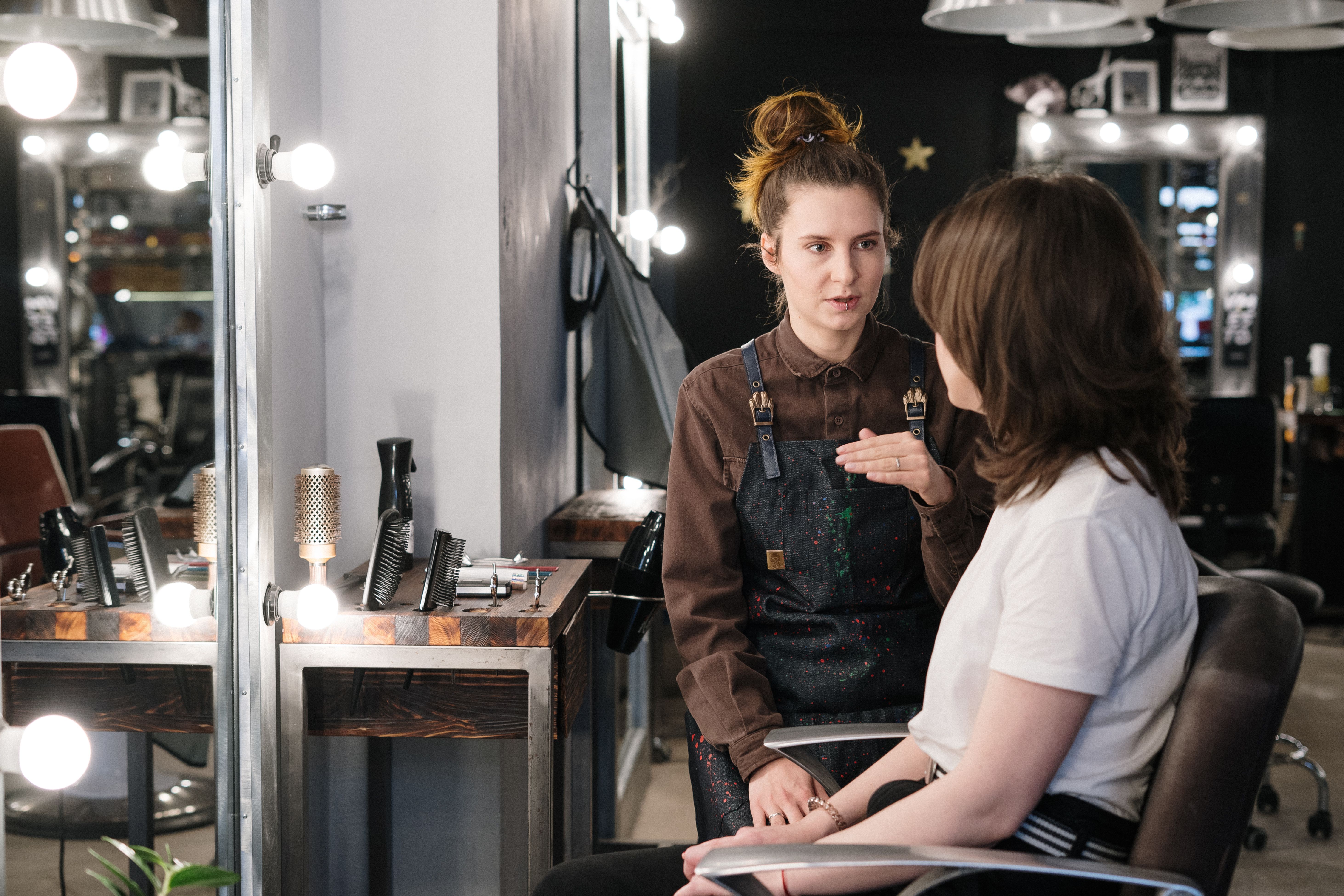
If your hair has started breaking despite careful habits, bring the tools conversation to Modern Texture Hair Salon. Sometimes the fix is a setting, sometimes it is a trim of heat-weakened ends, and a stylist can tell which in one look.
Storage and condition of the tools themselves play a small but real role. Plates coated in baked-on product drag instead of gliding, and dragging means more passes at higher pressure. Wipe plates clean when cool, and retire tools whose temperature control has become unreliable, because a tool that runs hotter than its display claims will defeat every careful setting you choose. It is an unglamorous detail, but heat styling is a system: product, temperature, technique, and tool condition all count toward the total dose.
Common questions
What temperature should I actually use?
The lowest one that styles your hair in one or two passes. Fine and lightened hair belongs at the low end of most tools' ranges, healthy coarse hair can use more, and maximum settings are rarely necessary for anyone.
Does heat protectant really work or is it marketing?
It works, within limits. It slows and evens heat transfer and reduces damage measurably, but it does not make any temperature safe. Protectant plus a sensible setting is the combination that matters.
Why does my hair frizz right after I straighten it in summer?
Humidity. Straightened hair absorbs moisture from humid air and reverts toward its natural texture. Anti-humidity finishing products help, but in peak Piedmont humidity some reversion is simply physics.
Photos in this guide are representative stock images.
← All guides from Modern Texture Hair Salon← Back to Modern Texture Hair Salon